Sasthamcotta, Kerala 690521 | 0476-2830323 | principal@ksmdbc.ac.in
Staff Login Student Login Parent Login
NAAC IQAC AQAR SSR ICC Anti-Ragging Cell RUSA DBT STAR DST-FIST NPTEL IIC NIRF Extension Online Services Downloads

WORLD ENVIRONMENT DAY 2021 – NATIONAL WEBINAR

OBSERVATION OF WORLD ENVIRONMENT DAY 2021

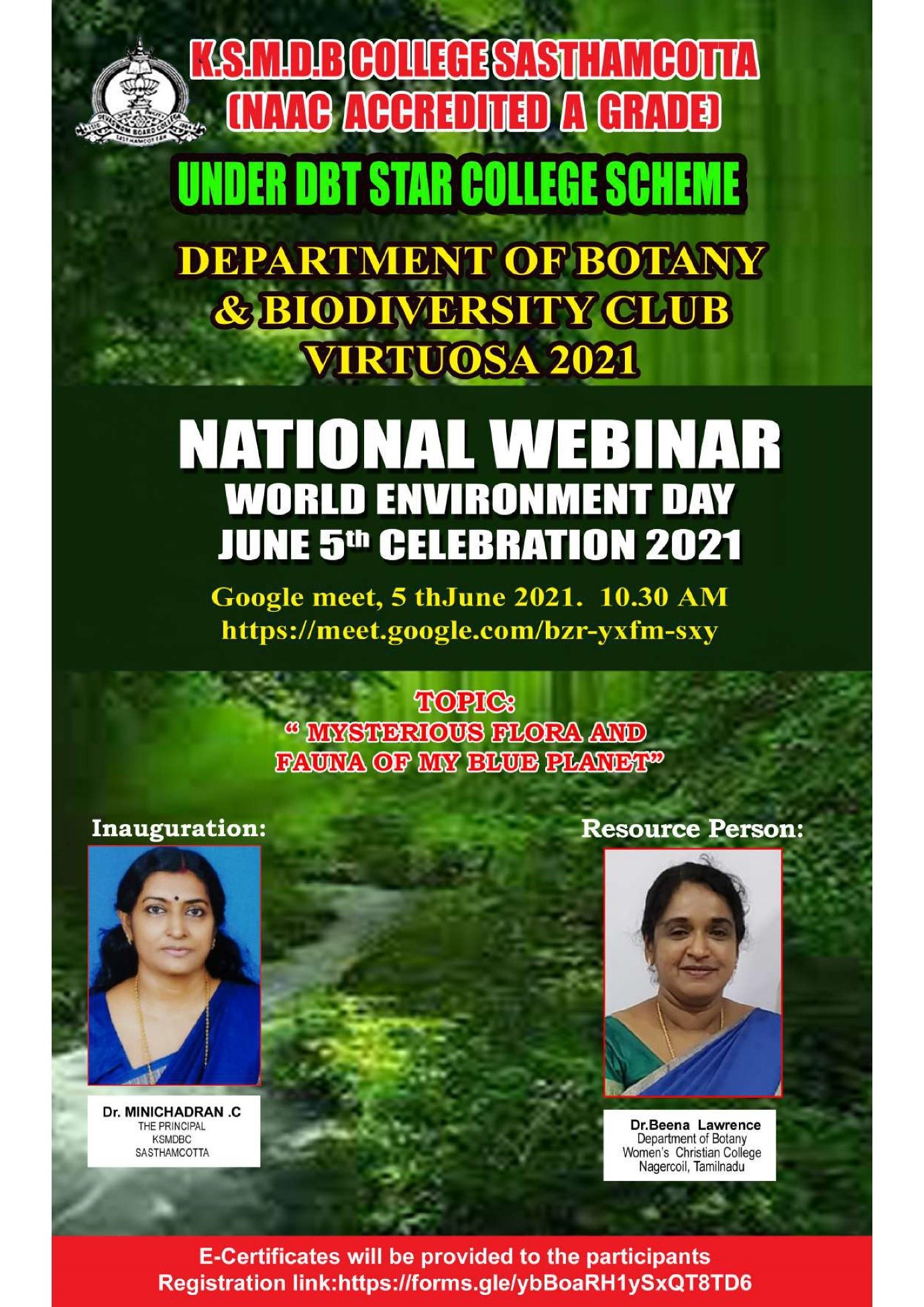
The biodiversity club and Department of Botany jointly organized one day webinar on the topic “Mysterious Flora and Fauna of my blue planet” on 5th June 2021 in connection with World Environment day celebration through Google meet platform. The formal inauguration of the Webinar was done by Dr. Mini Chandran.C, Principal, K.S.M.D.B College. The inaugural session was started with prayer followed by welcome address by Smt.Dhanya S.R, Coordinator, Biodiversity club. She explained the theme of World environment day 2021. Dr. Geethakrishnan Nair.P, HOD, Dept.of Botany delivered the presidential address. In the inaugural speech, Dr. Mini Chandran.C ,Principal, K.S.M.D.B College mentioned the importance of conservation wetland ecosystem. The Key note address was delivered by Dr. Beena Lawrence, Associate Professor, Department of Botany, Women’s Christian College, Tamil nadu and she spoke about mysterious flora and created awareness on conservation. Dr. Jayasree .V , IQAC Coordinator   offered  felicitation to the Webinar . Dr. Deepa.S, DBT STAR coordinator also delivered felicitation to the Webinar. Vote thanks delivered by Smt.Lekshmy Sreekumar. Around 100 participants comprising a blend of students, Research Scholars and faculties from various institutions attended the webinar from various parts of South India

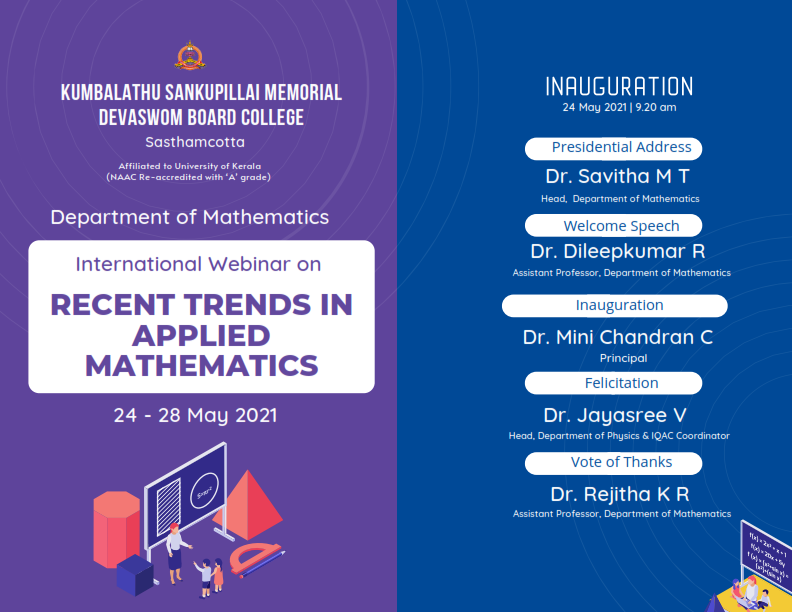
RECENT TRENDS IN APPLIED MATHEMATICS

International Webinar on

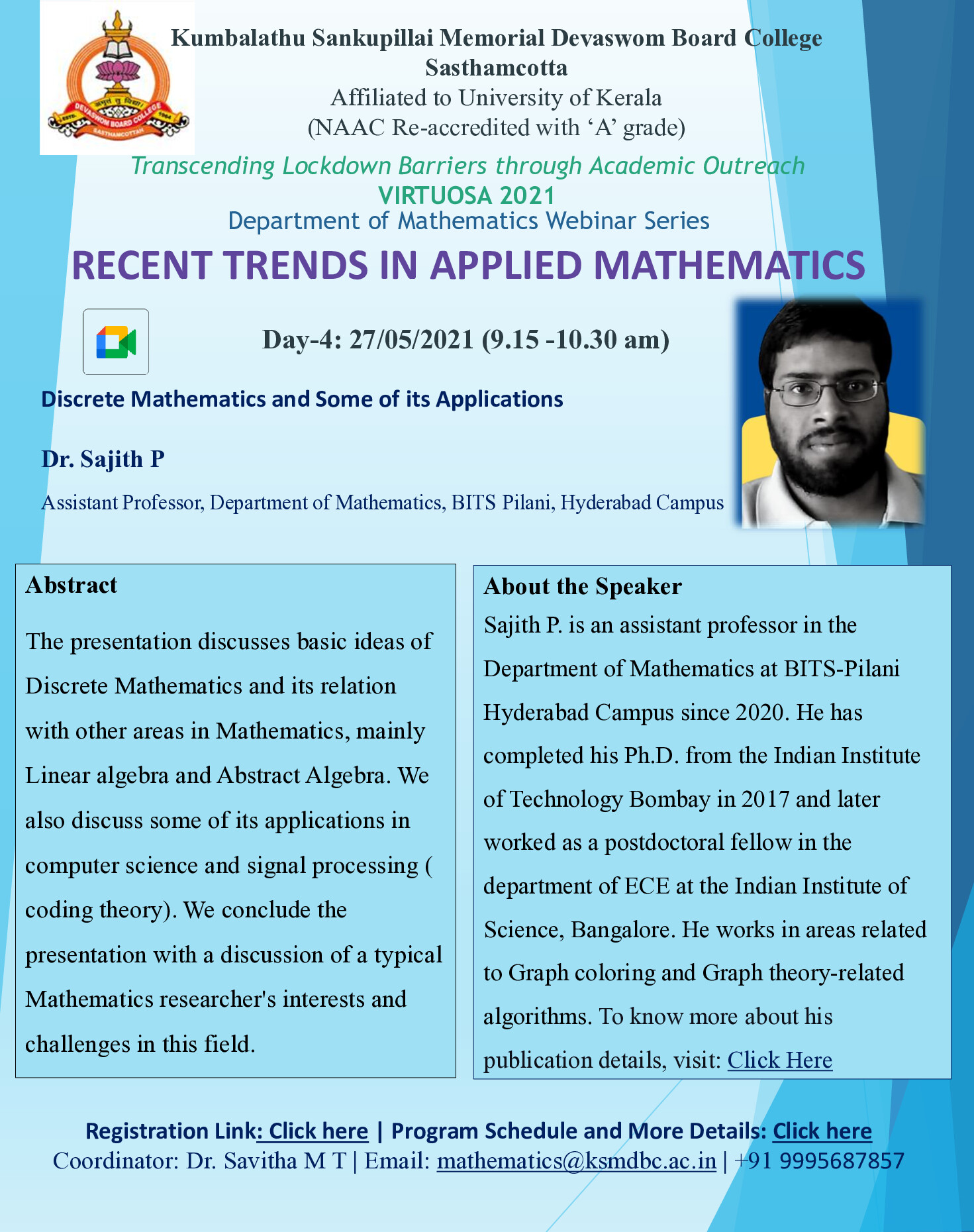
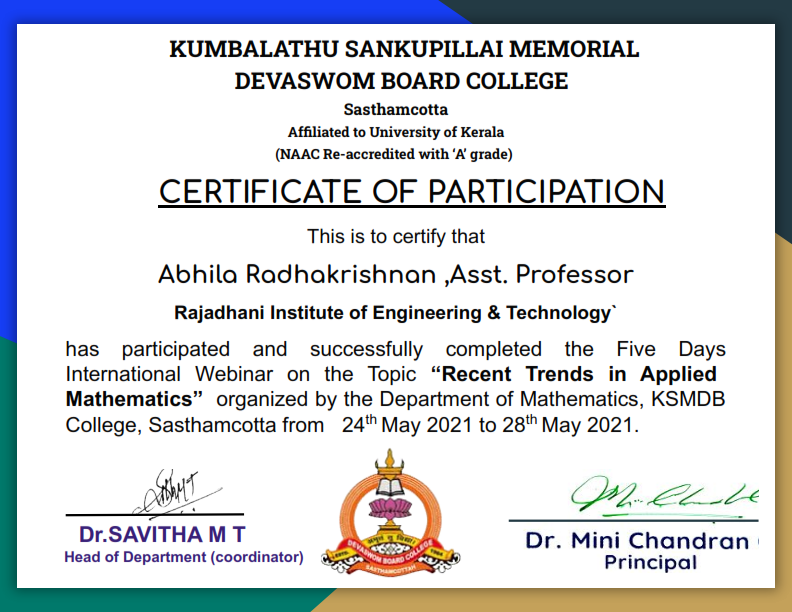
RECENT TRENDS IN APPLIED MATHEMATICS

 Event Summary


Coordinator of the seminar:  Dr. Savitha M T,  Assistant Professor and HoD  of Mathematics, KSMDB College, Sasthamcotta

Date: 24th May - 28th May 2021

Resource Person: Dr. S. Babu, Former HoD, Dept.of Mathematics, University College, Trivandrum

Video Lectures and more details of the webinar can be found here: https://sites.google.com/view/departmentofmathematicsksmdbc/home

Number of Attendees: 248 (Including students and faculties of various colleges)

Overview of the Webinars:

 This webinar was organized by the Department of Mathematics in association with IQAC -Virtuosa 2021 of KSMDB College Sasthamcotta.

 Applied mathematics has become an extremely important and useful discipline in the context of development of powerful computers. On the one hand, mathematics (in a broad sense) is the most efficient approach to model reality, especially complex reality. Moreover, it provides the best possibilities of reasoning. With cheap powerful computers, mathematics becomes implementable and unavoidable in designing, producing, deciding …etc.

On the other hand, mathematics has evolved considerably to extend its applicability to real problems. This is why applied mathematics is so alive and fast progressing. Needless to say, the connection between applied mathematics and information technology is an extremely fruitful approach to new ideas and a basic source of research topics.

The main objective of this five day workshop is to bring together the Experts, Faculty Members, Scientists, Research Scholars, PG students from Universities, Colleges, Scientific Organizations, and other Institutions of Higher Education from all over the country to discuss the recent trends and developments in the broad topics of the applied Mathematics and to promote exchange of ideas in various applications of mathematics in science and engineering. This workshop will provide an opportunity to young researchers to learn the current state of research & techniques.

We provided a participation certificate for all the participants, those who attended all five sessions.

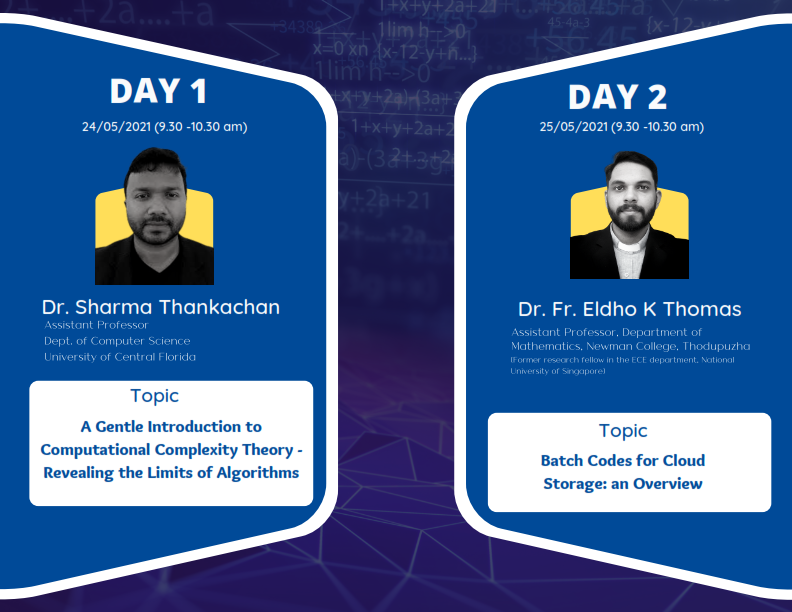
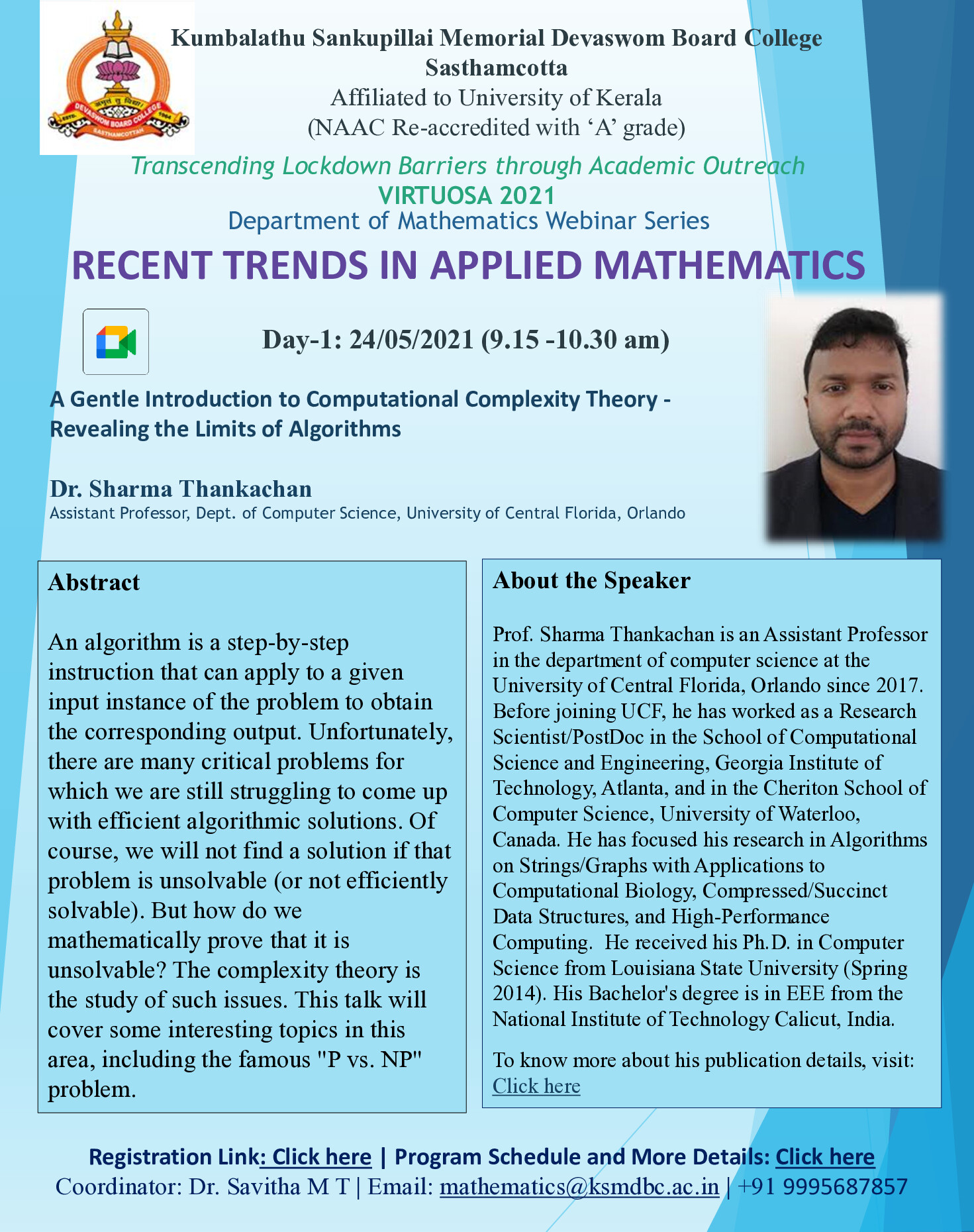
Day 1: A Gentle Introduction to Computational Complexity Theory - Revealing the Limits of Algorithms

Resource Person: Dr. Sharma Thankachan, Assistant Professor, Dept. of Computer Science, University of Central Florida, Orlando

Google Meet link: https://meet.google.com/koq-sugf-nru

Abstract of the Presentation

An algorithm is a step-by-step instruction that can apply to a given input instance of the problem to obtain the corresponding output. Unfortunately, there are many critical problems for which we are still struggling to come up with efficient algorithmic solutions. Of course, we will not find a solution if that problem is unsolvable (or not efficiently solvable). But how do we mathematically prove that it is unsolvable? Complexity theory is the study of such issues. This talk will cover some interesting topics in this area, including the famous "P vs. NP" problem.

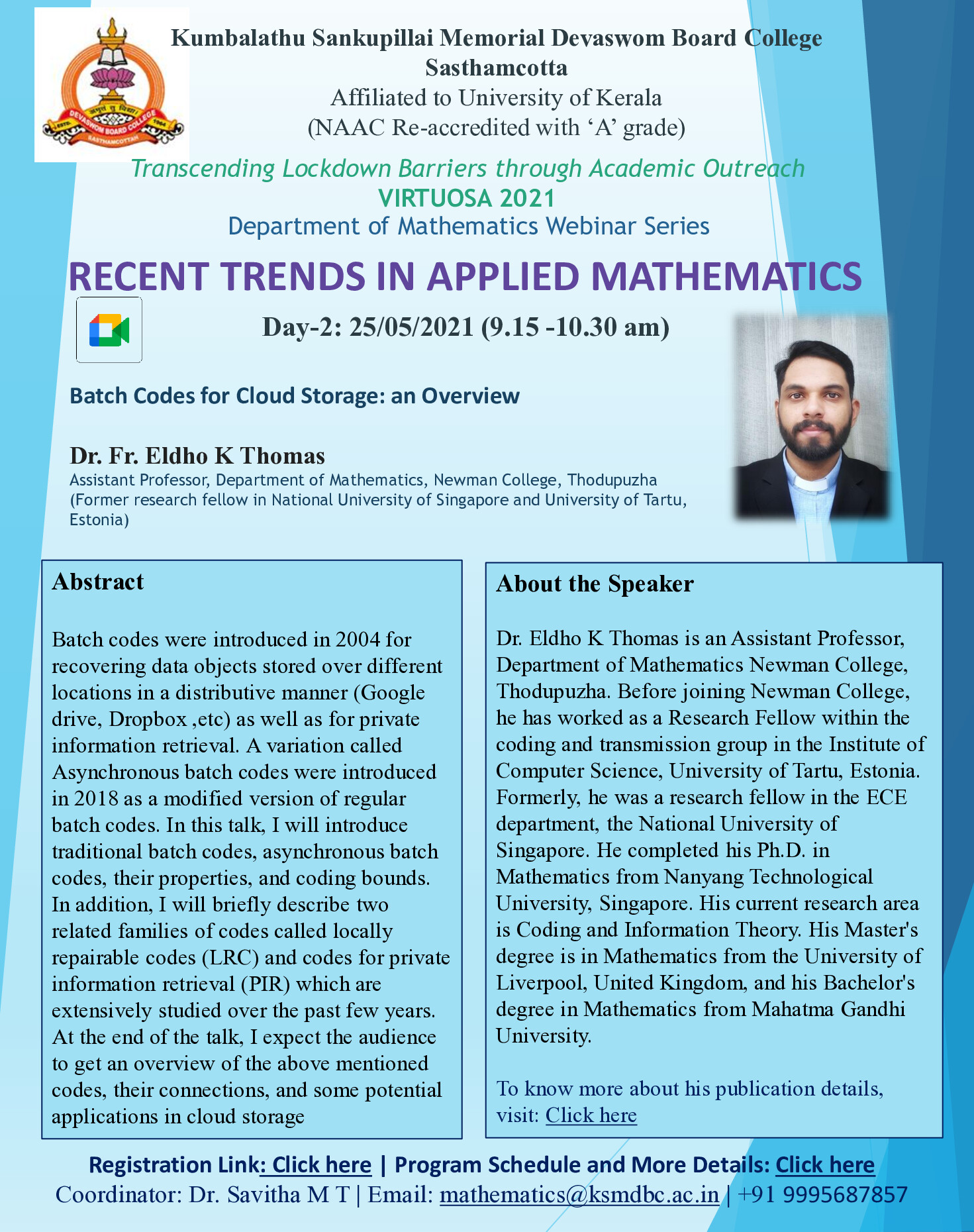
 Day 2: Batch Codes for Cloud Storage: an Overview

Resource Person: Dr. Fr. Eldho K Thomas, Assistant Professor, Department of Mathematics, Newman College, Thodupuzha, Former research fellow in National University of Singapore and University of Tartu, Estonia

Google Meet link: https://meet.google.com/xxr-wzmr-kmk

Abstract of the Presentation

Batch codes were introduced in 2004 for recovering data objects stored over different locations in a distributive manner (Google drive, Dropbox ,etc) as well as for private information retrieval. A variation called Asynchronous batch codes were introduced in 2018 as a modified version of regular batch codes. In this talk, I will introduce traditional batch codes, asynchronous batch codes, their properties, and coding bounds. In addition, I will briefly describe two related families of codes called locally repairable codes (LRC) and codes for private information retrieval (PIR) which are extensively studied over the past few years. At the end of the talk, I expect the audience to get an overview of the above mentioned codes, their connections, and some potential applications in cloud storage.

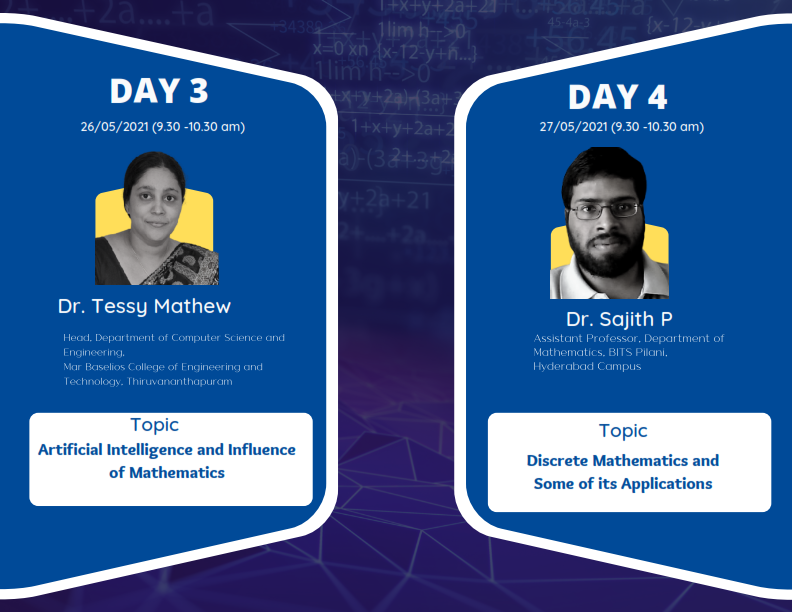
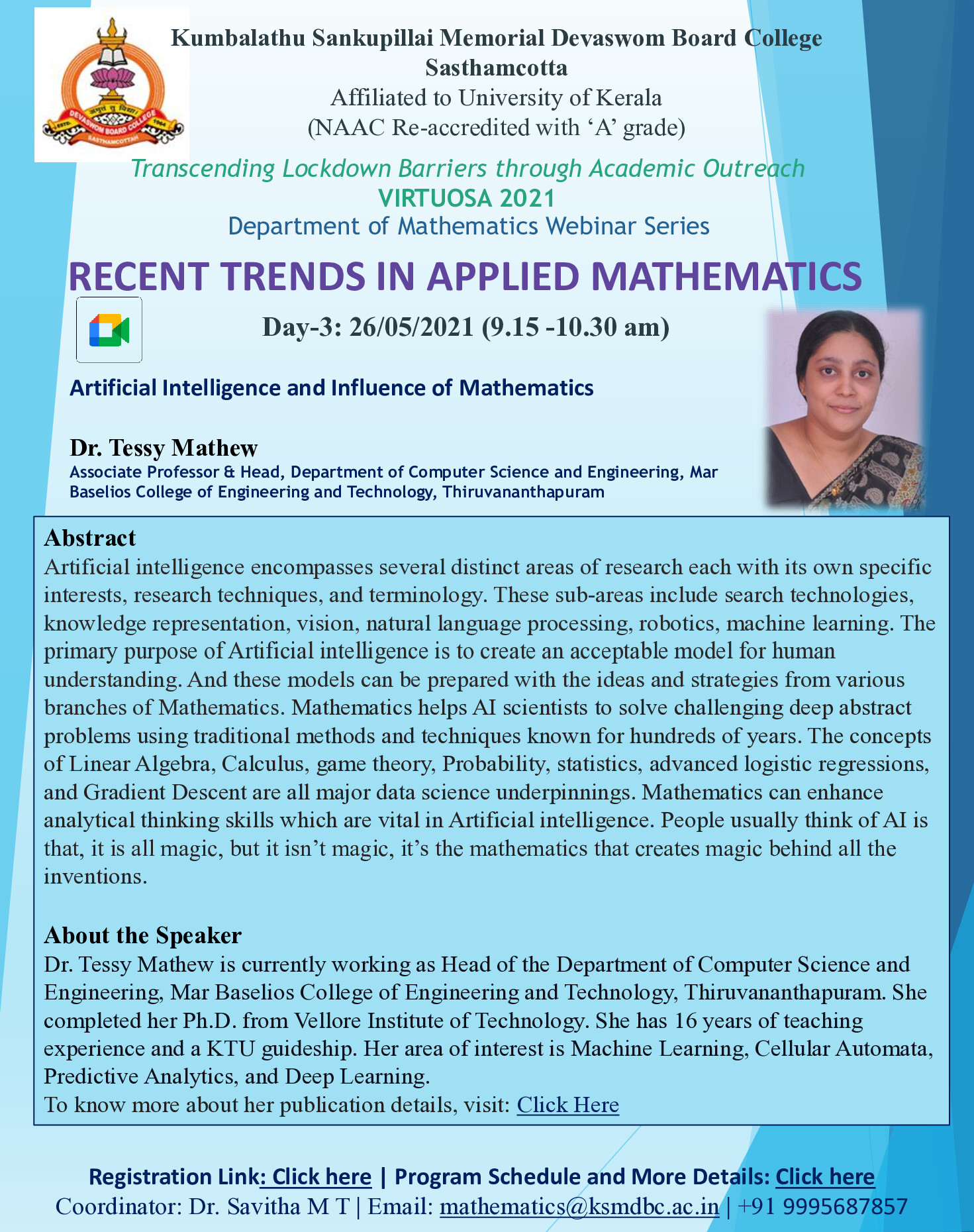
 Day 3: Artificial Intelligence and Influence of Mathematics

Resource Person: Dr. Tessy Mathew, Associate Professor & Head, Department of Computer Science and Engineering, Mar Baselios College of Engineering and Technology, Thiruvananthapuram

Google Meet link: https://meet.google.com/qnr-wgnw-net

Abstract of the Presentation

Artificial intelligence encompasses several distinct areas of research each with its own specific interests, research techniques, and terminology. These sub-areas include search technologies, knowledge representation, vision, natural language processing, robotics, machine learning. The primary purpose of Artificial intelligence is to create an acceptable model for human understanding. And these models can be prepared with the ideas and strategies from various branches of Mathematics. Mathematics helps AI scientists to solve challenging deep abstract problems using traditional methods and techniques known for hundreds of years. The concepts of Linear Algebra, Calculus, game theory, Probability, statistics, advanced logistic regressions, and Gradient Descent are all major data science underpinnings. Mathematics can enhance analytical thinking skills which are vital in Artificial intelligence. People usually think of AI is that, it is all magic, but it isn’t magic, it’s the mathematics that creates magic behind all the inventions.

Day 4: Discrete Mathematics and Some of its Applications

 Resource Person: Dr. Sajith P, Assistant Professor, Department of Mathematics, BITS Pilani, Hyderabad Campus

Google Meet link: https://meet.google.com/koq-sugf-nru

Abstract of the Presentation

The presentation discusses basic ideas of Discrete Mathematics and its relation with other areas in Mathematics, mainly Linear algebra and Abstract Algebra. We also discuss some of its applications in computer science and signal processing ( coding theory). We conclude the presentation with a discussion of a typical Mathematics researcher's interests and challenges in this field.

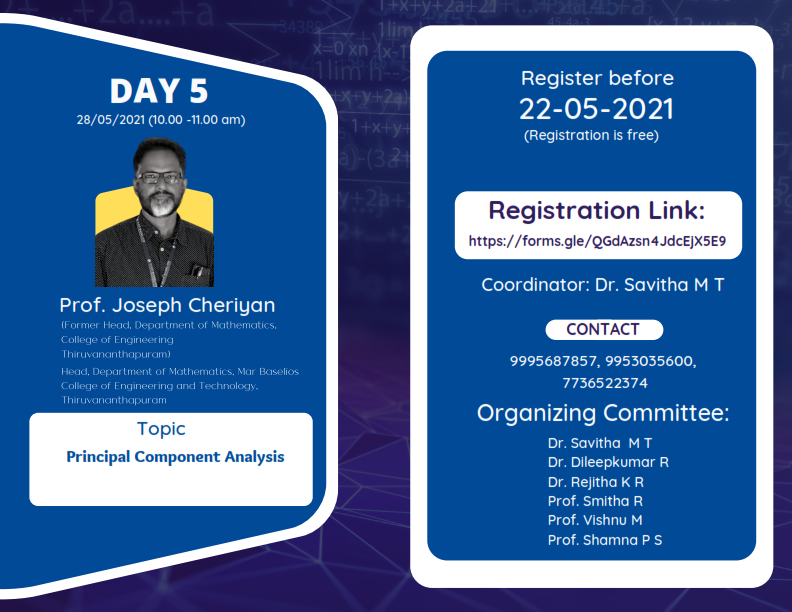
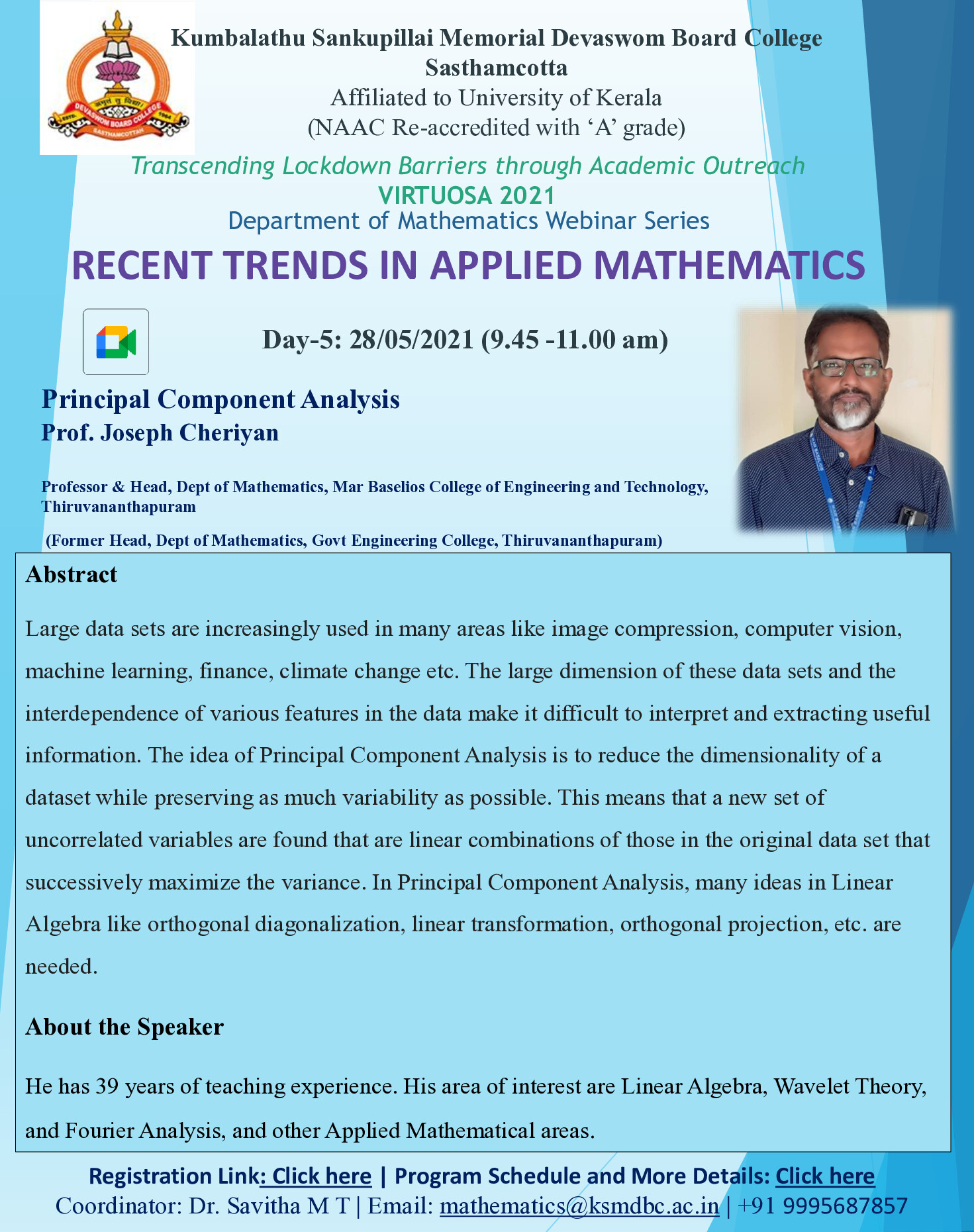
Day 5: Principal Component Analysis

 Resource Person: Prof. Joseph Cheriyan, Professor & Head, Dept of Mathematics, Mar Baselios College of Engineering and Technology, Thiruvananthapuram, (Former Head, Dept of Mathematics, Govt Engineering College, Thiruvananthapuram)

Google Meet link: https://meet.google.com/qjy-dicc-qcb

Abstract of the Presentation

Large data sets are increasingly used in many areas like image compression, computer vision, machine learning, finance, climate change etc. The large dimension of these data sets and the interdependence of various features in the data make it difficult to interpret and extracting useful information. The idea of Principal Component Analysis is to reduce the dimensionality of a dataset while preserving as much variability as possible. This means that a new set of uncorrelated variables are found that are linear combinations of those in the original data set that successively maximize the variance. In Principal Component Analysis, many ideas in Linear Algebra like orthogonal diagonalization, linear transformation, orthogonal projection, etc. are needed.
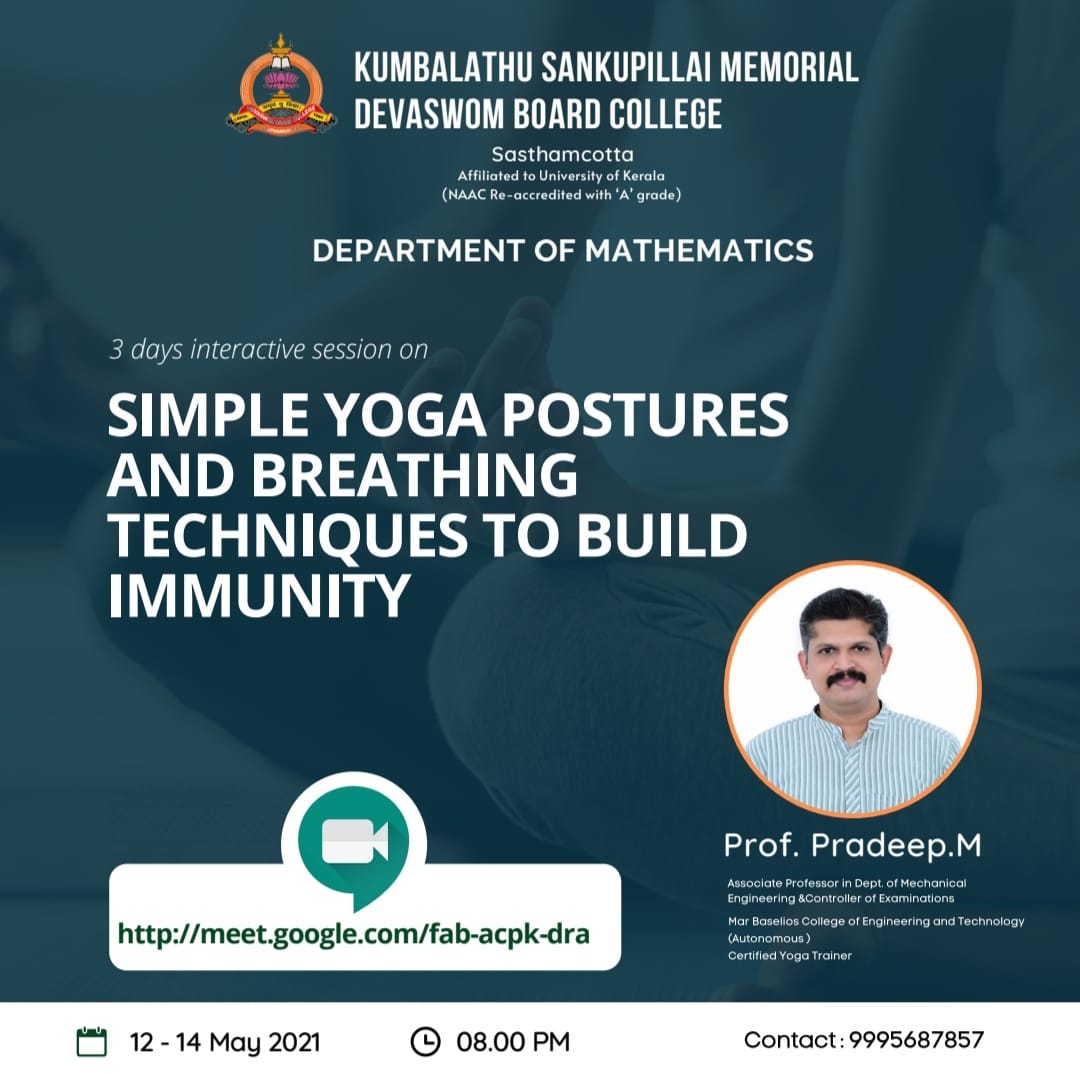
Simple Yoga Postures and Breathing Techniques to Build Immunity

Simple Yoga Postures and Breathing Techniques to Build Immunity

 Event Summary

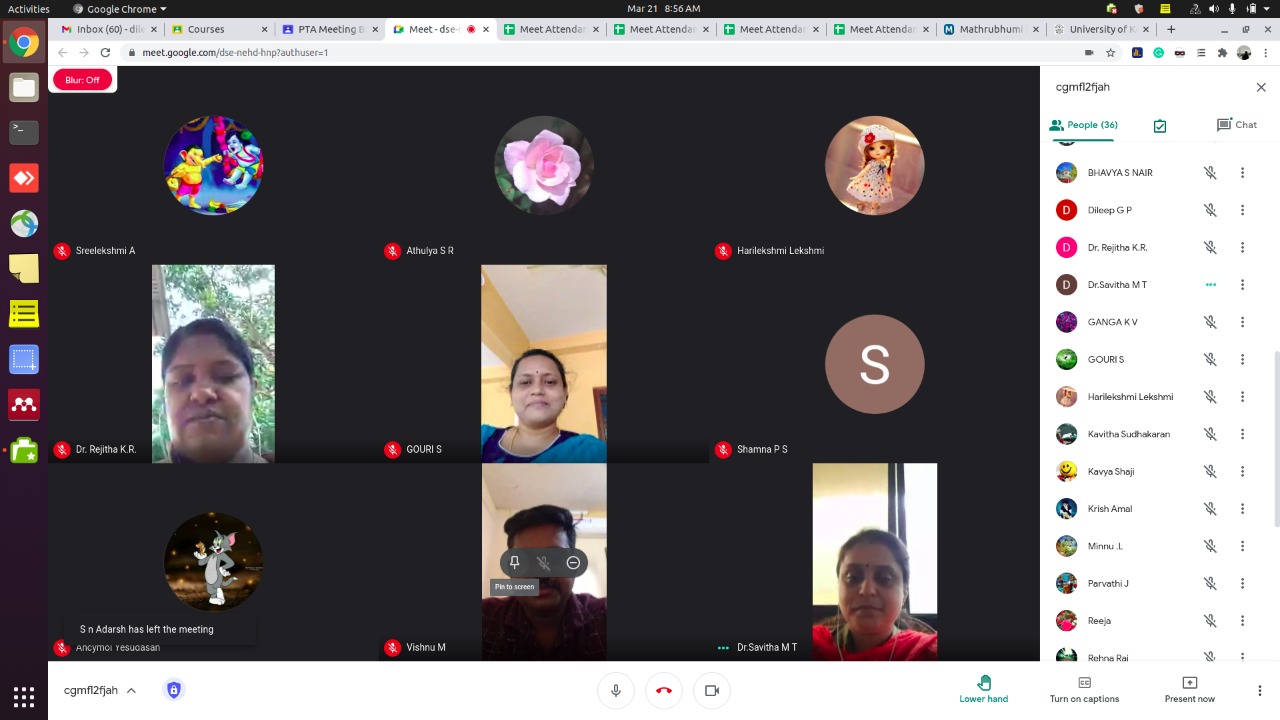
 Coordinator of the seminar:  Dr. Savitha M T,  Assistant Professor and HoD  of Mathematics, KSMDB College, Sasthamcotta

Venue: Online Platform (Google Meet: https://meet.google.com/fab-acpk-dra)

Date: 12th May- 14th May  2021

Resource Person: Mr. Pradeep, Associate Professor, Mar Baselios College of Engineering and

Technology, Thiruvananthapuram

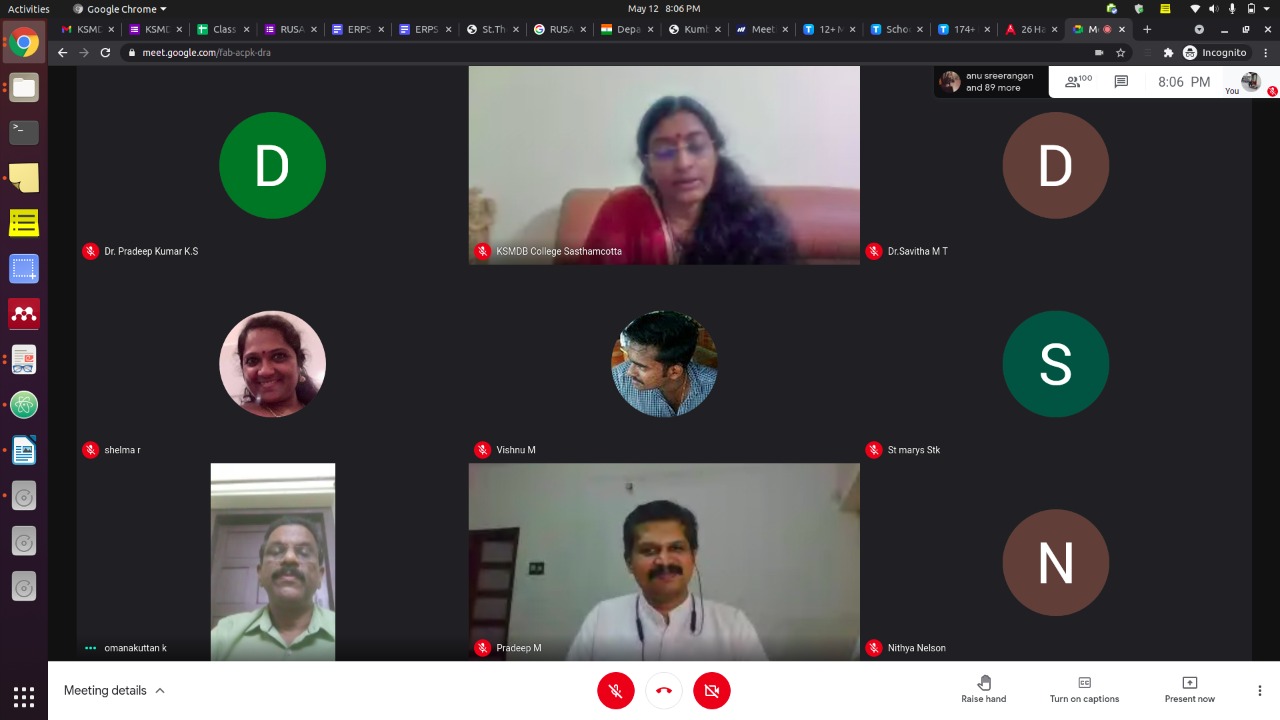
 Number of Attendees: 99 (Including students and faculties)

Overview of the Presentation:

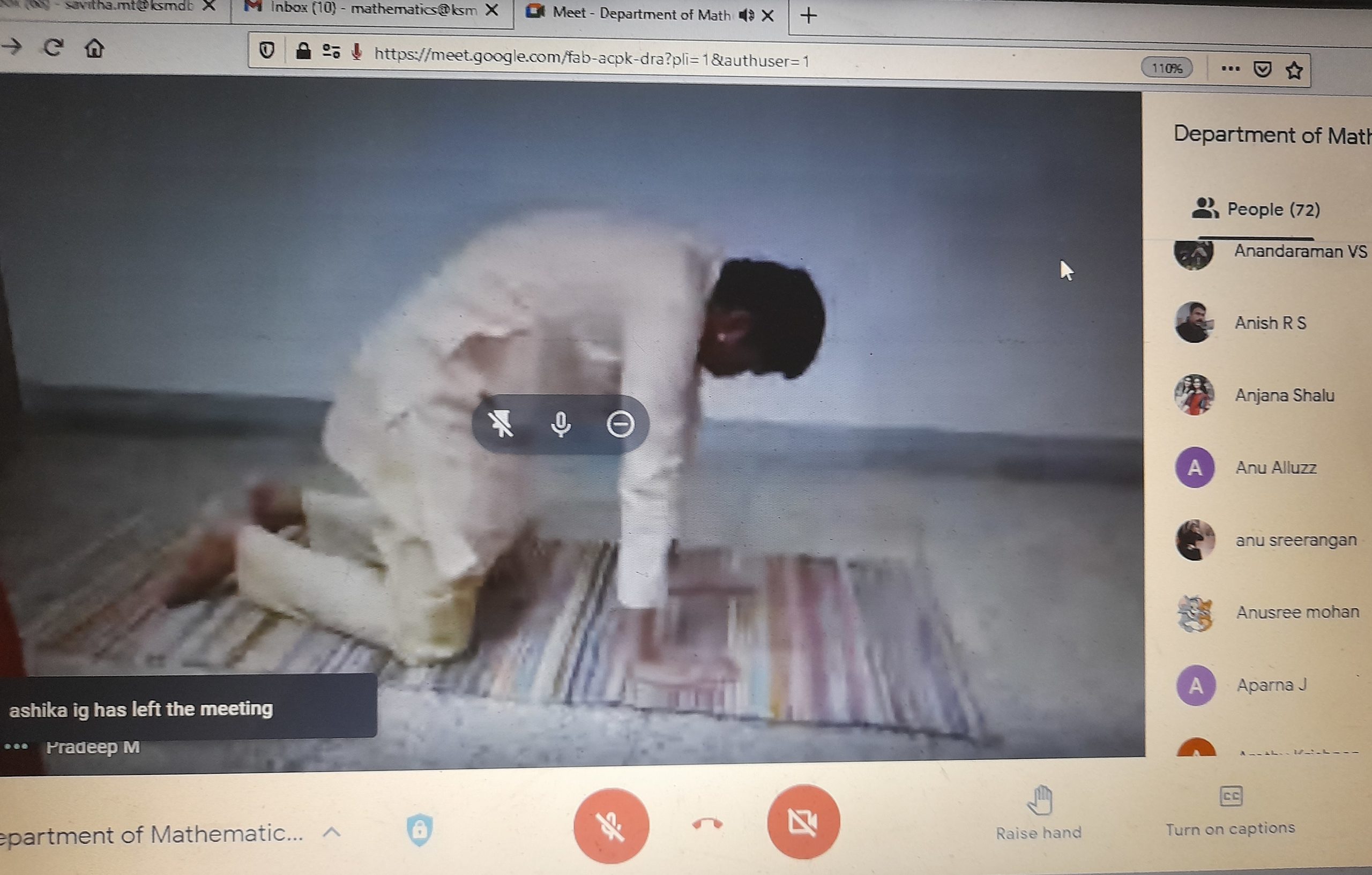
 Department of Mathematics organized a 3-days extension activity “Simple Yoga Postures and Breathing Techniques to Build Immunity” from 12th May to 14th May 2021, to help the students, their parents and officials of Sasthamcotta Village office to improve their immunity in this pandemic situation. Mr. Pradeep, Associate Professor, Mar Baselios College of Engineering and

Technology, Thiruvananthapuram was the resource person. He is a certified Yoga trainer. There were more than 100 participants. We got fruitful feedback for the programme.


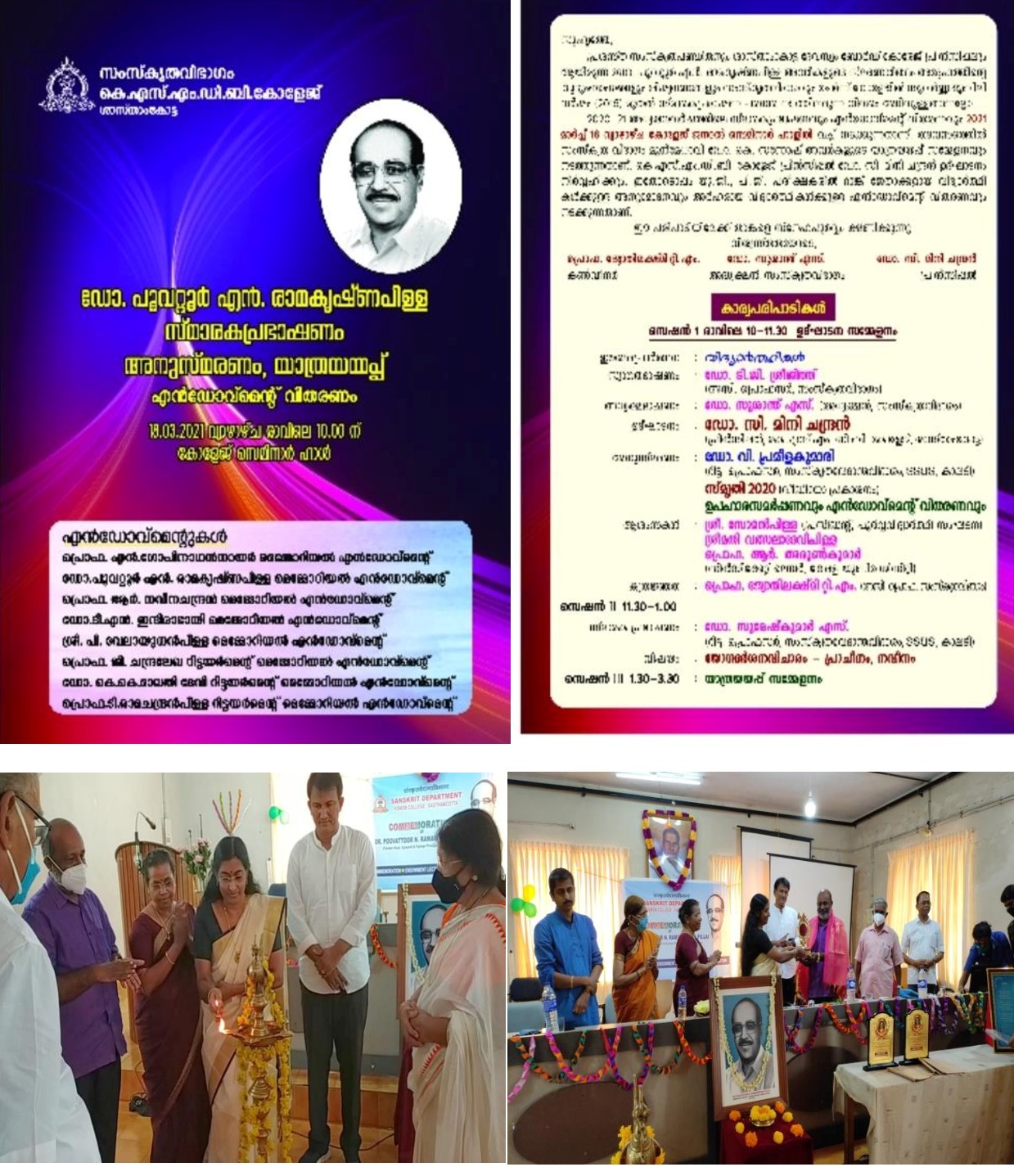
ഡോ . പുവറ്റൂർ എൻ . രാമകൃഷ്ണപിള്ള സ്മാരകപ്രഭാഷണം അനുസ്മരണം , യാത്രയയപ്പ് .

Commemoration of Dr. Poovattoor N Ramakrishnapillai (2020-21)

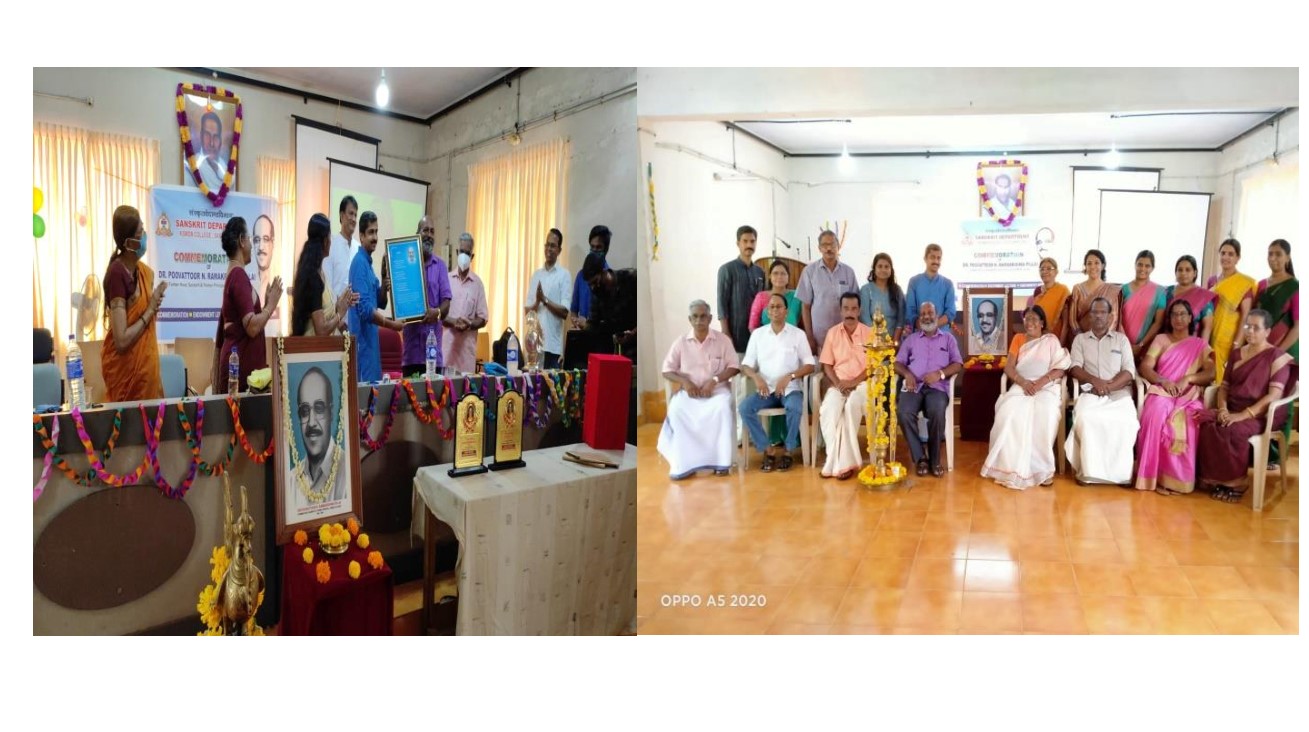
Dr.Poovattoor N Ramakrishnapillai was an eminent Scholar in Sanskrit and was the Principal of KSMDB College, Sasthamcotta.  As a tribute to his life and career a function has been organised by his disciples, family members and the dept.  of Sanskrit strictly following the Covid Protocol. This is one of the prestigious programmes of the dept. of Sanskrit since the year 2015.

During  this  year  it  was  organized  on  18/03/2021  at  the  general  Seminar  Hall  in KSMDBC along with the sent off function of Dr. K Santhosh, Former HoD of the dept. of Sanskrit.  It began with  an invocation to God by the students  at 10.30am. Dr.T.G Sreegith (Assistant Professor, Dept.of Sanskrit, KSMDBC) delivered the Welcome speech. Dr.S Susanth (Assistant Professor and HoD, Dept. of Sanskrit, KSMDBC) presided over the function and delivered the presidential address. Dr. C Mini Chandran (Principal, KSMDBC) inaugurated the function with her inaugural address.

Dr.V Prameelakumari (Rtd professor, SSUS, Kalady) delivered the Commemoration Speech. With the Guidance of Dr.T.G Sreegith, former students created a video containing the photos of the last year programme named „Smriti 2020‟ which was released by Dr.K Santhosh. The sent off function and endowment distribution were also carried out thereafter. Sri Soman Pillai (President, Alumni Association), Dr. Valsaladevi Pillai, Prof. R. Arunkumar (Syndicate member, University of Kerala) and Dr. Sreenivasan (Former faculty member) were among those who felicitated the programme. Dr. Sureshkumar S (Rtd professor, SSUS, Kalady) delivered the commemoration address on the topic “Yogadarsanavicharam-Pracinam, Naveenam”. Smt. Jyothilekshmi T.M (Assistant Professor, Dept.of Sanskrit, KSMDBC) expressed gratitude of the department  to  all  the  members  who  participated  in  the  function.  After  the  lunch  break  an informal sent off function was convened at the general Seminar Hall. Former faculty members, former students, ongoing students, family members and the present faculty members shared the memories related to Dr. K Santhosh. It came to an end at 5:00 pm.

Conformal Mapping

Conformal Mapping

Event Summary


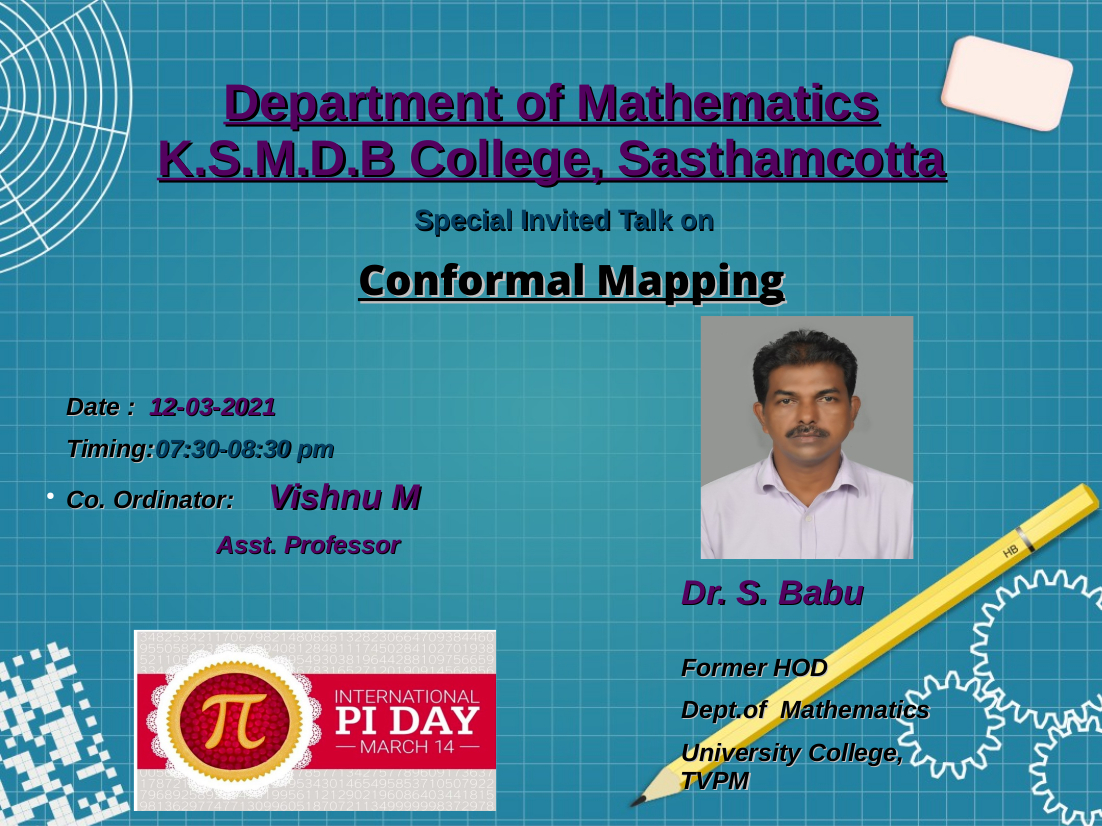
Coordinator of the seminar:  Vishnu M,  Assistant Professor, Department of Mathematics, KSMDB College, Sasthamcotta

Venue: Online Platform (Google Meet: https://meet.google.com/xok-xgcu-igh)

Date: 12th March 2021, 7.30 pm to 8.30 pm

Resource Person: Dr. S. Babu, Former HoD, Dept.of Mathematics, University College, Trivandrum

 Number of Attendees: 86 (Including students and faculties of various colleges)

Overview of the Presentation:

 As part of the International Pi Day celebration, the Department of Mathematics, KSMDB College, Sasthamcotta, conducted a special invited talk on Conformal Mapping.

Conformal mapping is an important technique used in complex analysis. A conformal mapping on Euclidean m-space Em can be decomposed into a product of similarity transformations and inversions. Conformal mapping has many applications in different physical situations like if the function satisfies harmonic equation and Laplace equation ∆2f, then the transformation of these functions through conformal mapping is also harmonic. In this talk,  he presented a brief introduction and the types of conformal mapping. With the help of this theory and its types,  he discussed the applications and relations of conformal mapping with bilinear transformation in the complex plane.


ശാസ്താംകോട്ട ശുദ്ധജല തടാകത്തിലെ ജൈവവൈവിധ്യത്തെക്കുറിച്ച് പഠിക്കാൻ പ്രത്യേക ടീ൦

National youth day –Elocution competition

National youth day –Elocution competition-Topic-The importance of Swami Vivekanada’s
insight in modern life

Winners of Elocution Competition
I prize – Krishna – II MAEcnomics
II prize – Anjali Sreekumar BSc-Second semester Chemistry
III prize- Sarath II Mcom

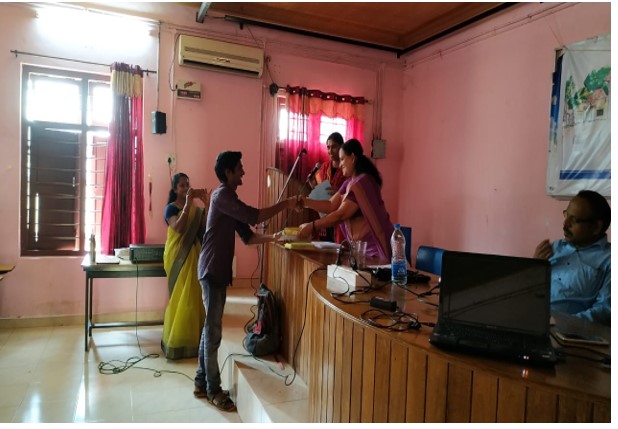
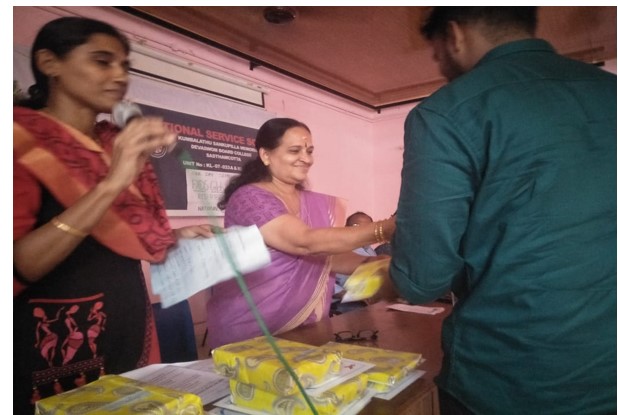
The prizes and Certificates for the winners of youth day competitions were distributed by our
honourable principal Dr.K.Beena

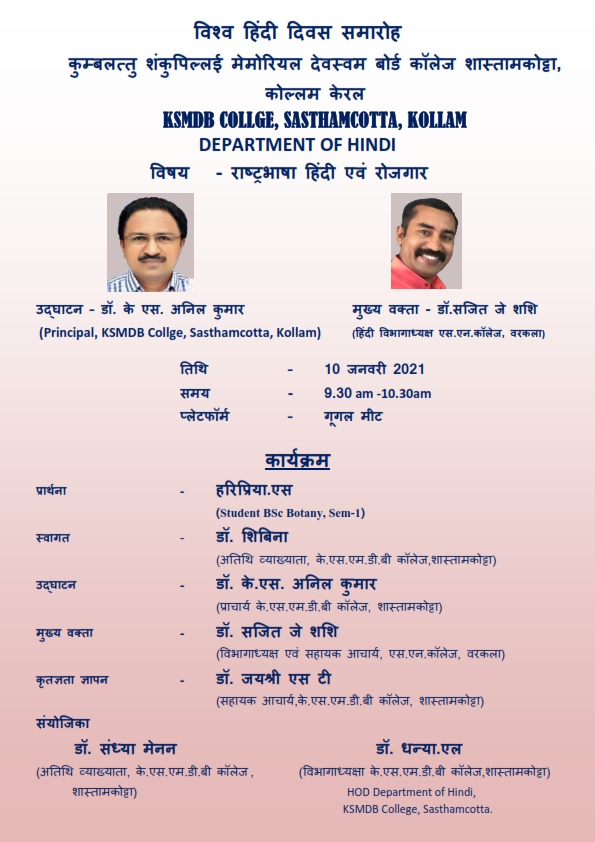
WORLD HINDI DAY : राष्ट्रभाषा हिंदी एवं रोजगार

2020-2021

DEPARTMENT OF BOTANY

Extension Activity 2020 – 2021

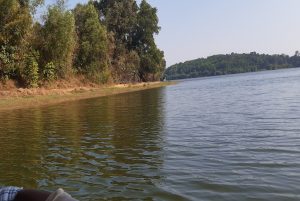
  As per the ardent demand of the current scenario and keeping importance of youth’s role for sustainable environment, the department of Botany has ignited and raised the level of environment consciousness among students and made them responsible towards the conservation of Sasthamcotta lake. Department of Botany plays an active role in not only promoting environmental consciousness among the Stakeholders community of the college but also in promoting environmental conservation among society.

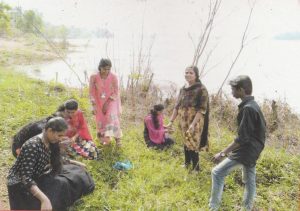
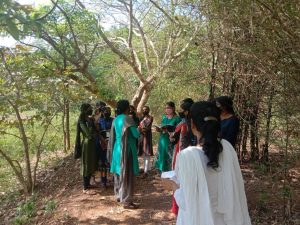
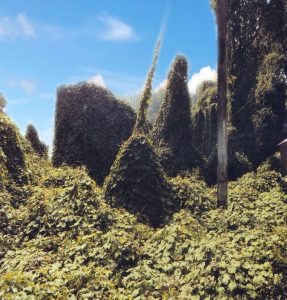
Department of Botany has organized a study of Invasive alien species of Sasthamcotta Lake, under the supervision of Ms Dhanya S.R, Asst. Professor in Botany. Dr. Geethakrishnan Nair.P ,H.O.D, Dept. of Botany and Ms Lekshmy Sreekumar, Asst.Professor in Botany also extend great support to this venture.  A total number of 15 students of B.Sc Final year students participated and got field experience and gained the knowledge of the impact of invasive alien species in the different areas of Sasthamcotta lakeside. The study was conducted from 7/1/21 to 20/3/21. Invasive Alien species are major threat to biodiversity after habit destruction and are a major cost to the economic wellbeing of the ecosystem. They cause enormous and often irreversible harm to biodiversity around the ecosystem by displacing native and useful species and changing ecosystems. They are responsible for the extinction or decline of many species. Local field trips were conducted about the invasive species in Sasthamcotta lakeside and the information were taken   into consideration for the study.

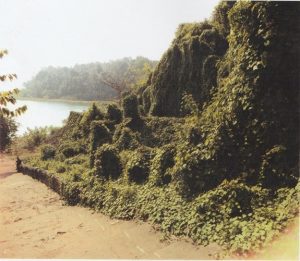
A total of 24 species of invasive aliens of the terrestrial vegetation of Sasthamcotta lakeside have been documented. Our field observation and discussion with local people indicate that there are 6 most noxious invasive plant species in this region. Some species such as Merrimia vitifolia, Mikania micrantha and Chromolaena odorata are harmful to native species. Merrimia vitifolia alters the natural growth of native plants because it not only obstructs plenty of sunlight to reach surface layer but also its allelopathic exudates cause retardation in seedling growth of native plants and destruct the natural riparian vegetation of Sasthamcotta lake.

FIELD STUDY

     YouTube link : https://youtu.be/x0jPf-GWLEo

2020-2021

2020_2021

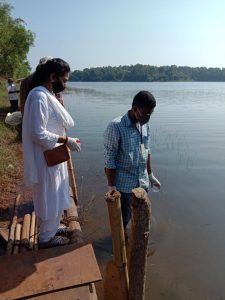
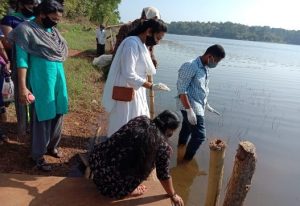
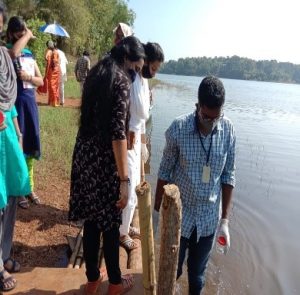
 With the involvement students of Department of Botany and of members of Bhoomitra Sena club, physicochemical and microbiological analysis of water quality of Sasthamkotta lake and we'll samples of Sasthamkotta Panchayat was conducted . 

Study was conducted under the supervision of Ms.Lekshmy Sreekumar, Assistant Professor of Department of Botany. Head of the Department of Botany,Dr.P. Geeta Krishnan Nair and Ms.Dhanya S.R, Assistant Professor of Department of Botany, also offered valuable suggestions. Eight students from the department of botany participated in the study, conducted on 18-12 -2020.

Water pollution caused by fecal contamination is a serious problem due to the potential for contracting diseases from pathogens. The presence of pathogens is determined with indirect evidence by testing for an "indicator" organism such as coliform bacteria. Coliforms are relatively easy to identify, are usually present in larger numbers than more dangerous pathogens. As a result, testing for coliform bacteria can be a reasonable indication of whether other pathogenic bacteria are present or not. 

Drinking water and well water samples from different localities of the Sasthankotta panchayath and different parts of lake was analysed for coliform testing Altogether 20 samples were analysed for preliminary screening. Those samples tested positive were further subjected to physicochemical and microbiological analysis in CEPCI (Cashew Export Promotion Council Of India) for testing total coliforms and the two subgroups thermotolerant faecal coliforms and E.Coli. The results indicated that the water tested was highly contaminated with the fecal material of man or other animals. ThePresence of fecal contamination is an indicator that a potential health risk exists for individuals exposed to this water. Fecal coliform bacteria may occur in ambient water as a result of the overflow of domestic sewage or nonpoint sources of human and animal waste.

Thus the public around the locality were advised to take proper measures to solve this issue.

Program 2 .

Awareness campaign were conducted among common people to promote sustainable development goals.